
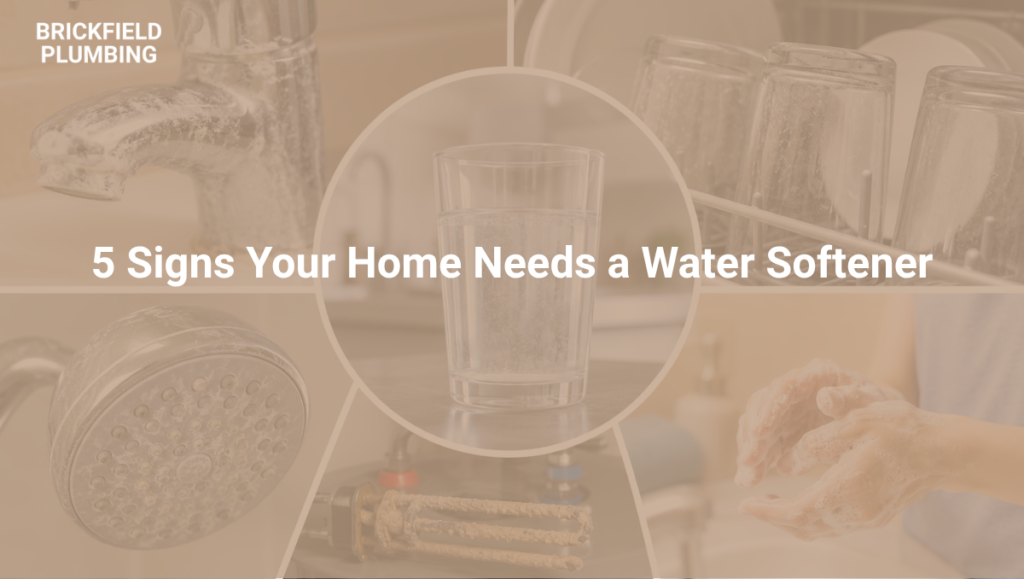
See the signs you need a water softener, from mineral buildup and water spots to scale and soap residue in your home.
If you’re dealing with recurring mineral deposits, spots on dishes or buildup around plumbing fixtures, you may be wondering whether hard water is responsible.
For homeowners in Kitchener and Waterloo Region, it’s a reasonable question. Much of the region’s municipal water supply comes from groundwater, which naturally picks up minerals as it moves underground. The Region of Waterloo identifies this water as hard and notes that the minerals can contribute to scale buildup in pipes and appliances.
But not every home needs a water softener.
If you’re experiencing several of these issues, these signs you need a water softener can help you decide whether it’s worth investigating water treatment.
Signs You Need a Water Softener: 5 Common Warning Signs
1. White Deposits Around Faucets
One of the easiest signs to spot is white or chalky buildup around faucets.
You may notice it around:
- Kitchen taps
- Bathroom faucets
- Shower fixtures
- Sink drains
These deposits can be associated with calcium and other minerals in hard water.
If you’re regularly cleaning this type of buildup, it may be worth looking at your home’s water hardness before deciding whether treatment is necessary.
2. Spots on Glasses and Dishes
Do your clean glasses still look cloudy?
Hard-water minerals can leave spots and residue behind after washing.
If this happens repeatedly despite normal cleaning, water hardness may be contributing to the problem.
The issue can be particularly noticeable on glassware, where even a small amount of mineral residue can leave a visible film.
3. Mineral Buildup Around Your Shower
Showerheads and other wet fixtures can develop mineral deposits over time.
If you’re frequently removing white buildup from your showerhead, faucet or other fixtures, hard water could be part of the reason.
Hard-water scale can also accumulate around small openings in showerheads, potentially affecting water flow over time.
However, regular cleaning is still important regardless of whether you have softened water.
4. Scale Around Hot-Water Equipment
Hard water can be particularly relevant to equipment that heats water.
Heating can encourage mineral scale formation, which is one reason water hardness is often considered when evaluating water heaters and other hot-water equipment. The Region of Waterloo specifically notes that hard-water minerals can contribute to scale buildup in appliances.
If you’re replacing an older water heater, it may be worth discussing your home’s water hardness with your plumber.
However, don’t assume that hard water is automatically the cause of a water-heater problem. Water heaters can have many different issues, and a professional assessment can help identify the actual cause.
5. Soap Doesn’t Lather or Rinse the Way You Expect
Hard water can affect how soap behaves.
Calcium and magnesium can interact with soap, which may contribute to residue and make soap feel different when washing.
Some homeowners notice that they use more soap or that they don’t get the same lather they expect when showering or washing their hands.
If you’re experiencing this alongside mineral deposits, spotting and scale, it may be another indication that water hardness is affecting your household water.
Do These Signs Mean You Need a Water Softener?
No.
These signs can indicate that hard water is affecting your home, but they don’t automatically mean you need a water softener. Ontario’s guidance on hard water and water treatment notes that hardness is caused by naturally occurring minerals and provides information on possible household treatment options.
Before purchasing a system, consider:
- How severe the problem is
- Your home’s water hardness
- Your household’s water usage
- Your personal preferences
- Salt and maintenance requirements
- Installation and ongoing costs
- Whether you want to treat the entire home or only certain water uses
A water softener is an option—not a requirement.
If you’re unsure whether the potential benefits justify the cost, our guide to the benefits of a water softener explains what softened water can realistically help with.
A water softener isn’t the only water-treatment option available. If you’re also considering drinking-water filtration, it’s worth understanding the difference between a water softener vs. reverse osmosis and what each system is designed to address.
How to Know If You Need a Water Softener
If you’re noticing several of these signs, start by finding out how hard your home’s water actually is.
The Region of Waterloo provides information about local water hardness and water-softening options. It also recommends setting a softener according to the correct water hardness and household needs to avoid unnecessary salt and water use.
Then consider what you want the system to accomplish.
Do you want to reduce mineral deposits throughout the house?
Are you primarily concerned about scale around hot-water equipment?
Would you prefer softened water for bathing and laundry?
Your answers can help determine whether whole-home softening or another approach makes more sense.
If you’re still researching the issue, read our guide to hard water in Kitchener to learn more about why hard water is common in the area and what it can mean for your home.
Final Thoughts
If you’re seeing white deposits, spotting, scale or recurring mineral buildup, hard water may be contributing to the problem.
For homeowners in Kitchener and Waterloo Region, hard water is common, but that doesn’t mean every household needs a water softener.
The best approach is to understand your home’s water hardness, identify the problems you’re actually experiencing and then decide whether treatment is worthwhile.
If you’re considering water softener installation in Kitchener, speak with a qualified plumber about your home’s water and the type of system that may be appropriate.