
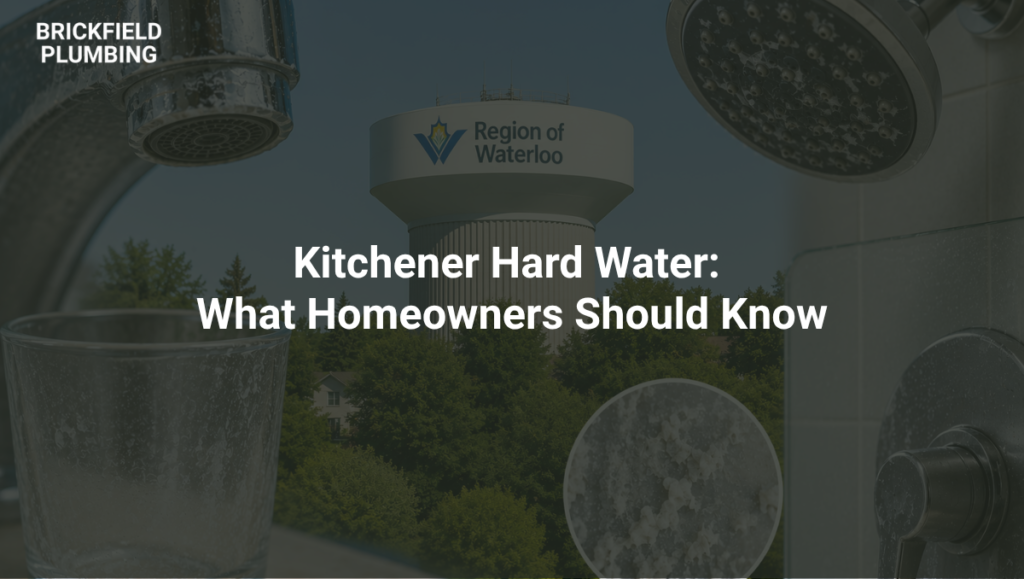
Does Kitchener have hard water? Learn why water is hard in Kitchener, what it means for your home and whether you need a water softener.
Does Kitchener Have Hard Water? What Homeowners Should Know
If you’ve noticed white spots around your faucets, mineral buildup on your showerhead, or cloudy marks on your dishes, you may be wondering whether Kitchener has hard water.
The short answer is yes. Hard water is common throughout Waterloo Region because much of the area’s municipal water supply comes from groundwater.
But hard water isn’t necessarily something homeowners need to worry about from a drinking-water safety perspective. The bigger issue is how dissolved minerals such as calcium and magnesium can affect everyday household water use.
Here’s what Kitchener homeowners should know about hard water, including what causes it, how to recognize it and whether a water softener is worth considering.
Kitchener Hard Water: Why It Happens
Water hardness is largely determined by where water comes from and what it encounters underground.
Much of Waterloo Region’s municipal water supply comes from groundwater wells. As groundwater moves through soil and rock, it naturally picks up minerals, including calcium and magnesium.
The Region of Waterloo drinking water information provides additional information about the region’s water supply and treatment.
Hardness can vary depending on your location, so homeowners shouldn’t assume that every property has exactly the same water conditions.
What Does Hard Water Mean?
Hard water simply contains higher levels of dissolved minerals, primarily calcium and magnesium.
You may notice:
- White mineral deposits around faucets
- Spots on glassware
- Scale around showerheads
- Residue on sinks
- Soap that doesn’t seem to rinse as easily
- Mineral buildup around hot-water equipment
These are common signs associated with hard water.
Hard water itself isn’t necessarily a sign that something is wrong with your plumbing.
The Region of Waterloo states that its hard water is safe to drink.
Is Hard Water Bad for Your Plumbing?
This is where homeowners sometimes get conflicting information.
Hard water can contribute to mineral deposits and scale, particularly in equipment that heats water.
However, that doesn’t mean hard water will automatically damage your home’s plumbing.
Modern plumbing systems don’t necessarily develop the same scale problems associated with older plumbing materials.
A water softener should therefore be viewed as a water-treatment option, rather than a guaranteed solution to every plumbing problem.
Signs of Hard Water in Your Kitchener Home
You don’t necessarily need specialized equipment to notice some of the common signs.
White Deposits Around Faucets
Look around your kitchen and bathroom faucets.
If you regularly see white or chalky deposits, hard-water minerals may be contributing.
Spots on Dishes
Cloudy or white spots on glasses and dishes can also be associated with hard water.
Showerhead Buildup
Mineral deposits can accumulate around showerheads and other fixtures that regularly come into contact with water.
Soap Residue
Some homeowners notice that soaps and detergents behave differently with hard water.
Scale Around Hot-Water Equipment
Because heating water can encourage scale formation, hard water may be particularly noticeable around water heaters and other hot-water equipment.
Does Everyone in Kitchener Need a Water Softener?
No.
This is important.
Hard water is common in Kitchener, but that doesn’t mean every homeowner needs a water softener.
Whether you want one depends on:
- Your home’s water hardness
- Your household’s water usage
- How much mineral buildup you’re experiencing
- Your preferences
- Your plumbing configuration
- Your willingness to maintain the system
Some homeowners are perfectly comfortable with hard water.
Others prefer softened water because it can reduce mineral deposits and make certain household tasks easier.
If you’re considering one, our complete guide to water softener installation in Kitchener explains what to consider before choosing a system.
Can Hard Water Affect Your Water Heater?
Hardness can be particularly relevant to equipment that heats water.
Minerals can contribute to scale formation, which is one reason the Region of Waterloo identifies protecting water heaters against scaling as a potential benefit of softening hot water.
If you’re experiencing problems with your water heater, however, don’t automatically assume hard water is the cause.
A professional inspection can help determine what’s actually happening.
For homeowners considering a new system, see our guide to water heater installation in Kitchener.
Hard Water in Kitchener and Waterloo Region
Hard water isn’t limited to Kitchener.
Homeowners throughout Waterloo Region may experience hard water because groundwater is an important part of the region’s municipal water supply.
That makes water-softening questions relevant to homeowners in:
- Kitchener
- Waterloo
- Cambridge
- Surrounding communities
The exact water conditions can vary by location, so it’s better to use local information rather than assume every home has identical water hardness.
Should You Test Your Water?
If you’re considering purchasing a water softener, understanding your water hardness is a useful first step.
You want to know what you’re actually trying to treat before selecting equipment.
This can help with:
- Choosing the right system
- Setting the hardness level
- Determining capacity
- Avoiding unnecessary regeneration
- Managing salt and water consumption
The Region of Waterloo provides local water-hardness information that homeowners can use when configuring a softener.
Final Thoughts
Yes, Kitchener has hard water, and it’s common throughout Waterloo Region.
The hardness comes primarily from naturally occurring minerals in groundwater.
For most homeowners, the question isn’t whether hard water exists—it’s whether the effects of that hardness are significant enough to make water softening worthwhile.
If you’re seeing persistent mineral deposits, want to reduce scale around hot-water equipment or simply prefer the feel of softened water, a water softener may be worth considering.
If you’re unsure, speak with a qualified plumber before purchasing a system.
Brickfield Plumbing provides residential plumbing services throughout Kitchener, Waterloo, Cambridge and Guelph.